
Artificial Intelligence has moved far beyond being a futuristic concept. Today, it is deeply embedded in everyday life, from personalized recommendations and virtual assistants to medical diagnostics and business automation. As technology continues to evolve, the next decade promises even more profound changes driven by AI.
(You will be redirected to another page)
Understanding where Artificial Intelligence is heading is essential for professionals, businesses, and societies that want to stay competitive and prepared. In this article, you will explore the key trends that will shape the future of Artificial Intelligence over the next ten years and how these developments will impact work, innovation, and daily life.
The Rapid Evolution of Artificial Intelligence
The pace of Artificial Intelligence development is accelerating faster than any previous technological revolution. Advances in computing power, access to massive datasets, and improvements in machine learning models are enabling AI systems to become more accurate, adaptive, and autonomous.
Over the next decade, AI will continue to evolve from task-specific tools into more general-purpose systems capable of handling complex, multi-step problems. This evolution will allow Artificial Intelligence to move beyond simple automation and play a strategic role in decision-making across industries.
Smarter and More Autonomous AI Systems
One of the most significant trends shaping the future of Artificial Intelligence is increased autonomy. AI systems are becoming capable of learning continuously from new data without constant human intervention. This allows them to adapt to changing environments in real time.
In fields such as transportation, finance, and logistics, autonomous AI systems will optimize operations, predict risks, and respond instantly to unexpected events. While human oversight will remain essential, Artificial Intelligence will handle a growing share of complex operational decisions.
(You will be redirected to another page)
Artificial Intelligence and the Transformation of Work
The next decade will redefine how people work. Artificial Intelligence will automate repetitive and time-consuming tasks across sectors, allowing humans to focus on creativity, strategy, and problem-solving.
Rather than eliminating jobs entirely, AI will transform roles. New professions related to AI development, ethics, data analysis, and system supervision will emerge. At the same time, traditional careers will integrate AI tools to improve productivity and efficiency.
Continuous learning will become critical. Workers who understand how to collaborate with Artificial Intelligence will have a significant advantage in the evolving job market.
The Expansion of AI in Healthcare and Science
Artificial Intelligence will play a transformative role in healthcare over the next ten years. AI-powered systems will improve early disease detection, personalize treatments, and support medical professionals with more accurate diagnostics.
In scientific research, Artificial Intelligence will accelerate discoveries by analyzing massive datasets, simulating experiments, and identifying patterns beyond human capability. This will impact fields such as genetics, climate science, and drug development, leading to faster innovation and more effective solutions.
Ethical AI and Responsible Development
As Artificial Intelligence becomes more powerful, ethical considerations will become increasingly important. Issues such as data privacy, algorithmic bias, transparency, and accountability will shape how AI is developed and regulated.
Governments and organizations are expected to establish clearer frameworks to ensure responsible AI use. Ethical Artificial Intelligence will focus on fairness, human oversight, and respect for individual rights.
In the next decade, trust will be a defining factor. Companies that prioritize ethical AI practices will gain credibility, while those that ignore these concerns may face legal and reputational risks.
(You will be redirected to another page)
Artificial Intelligence and Human Creativity
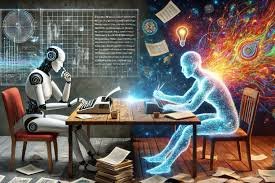
Another important trend is the growing collaboration between intelligent technologies and human creativity. AI tools are already assisting artists, writers, designers, and musicians by generating ideas, accelerating workflows, and enabling experimentation.
In the future, these systems will become even more powerful creative partners. Rather than replacing human expression, they will expand creative possibilities, allowing individuals to explore new styles and concepts more efficiently.
Creativity will increasingly be defined by collaboration between human imagination and intelligent systems.
AI-Powered Personalization Everywhere
Personalization will become a defining feature of the technology-driven future. Intelligent systems will tailor experiences in education, entertainment, healthcare, and digital services to individual preferences and needs.
Learning platforms will adapt content to each student’s pace and style. Healthcare solutions will offer personalized treatment plans. Digital services will anticipate user needs more accurately than ever before.
This level of personalization will improve user experiences but will also require careful management of data and privacy.
Artificial Intelligence and Global Inequality
While these technologies offer enormous potential, they also present challenges related to access and inequality. Countries and organizations with greater technological resources may benefit disproportionately, widening global gaps.
Over the next decade, efforts to democratize advanced systems will be crucial. Open-source tools, affordable platforms, and global collaboration can help ensure that benefits are shared more broadly.
Education and digital inclusion will play a key role in preventing technology-driven inequality.
The Role of Artificial Intelligence in Smart Societies
Intelligent solutions will increasingly support smarter cities and infrastructure. Data-driven systems will manage energy consumption, traffic flow, waste management, and public safety more efficiently.
These smart solutions will improve sustainability, reduce costs, and enhance quality of life. However, they will also require transparent governance to ensure responsible data use and public trust.
The integration of advanced technologies into urban environments will redefine how societies function.
Final Thoughts
The future of this field will be shaped by innovation, responsibility, and human collaboration. Over the next decade, intelligent systems will become more autonomous, more integrated into daily life, and more influential across industries.
While challenges related to ethics, employment, and inequality remain, these technologies also offer unprecedented opportunities for progress. The key to success lies in understanding these trends and preparing for change.
Artificial Intelligence is not just shaping the future of technology — it is shaping the future of society. Those who adapt, learn, and use these tools responsibly will help define the next decade.
 Keep an eye on this