
Cybersecurity is no longer a concern only for large corporations and tech companies. Today, small businesses are just as likely — and often more likely — to be targeted by cybercriminals. Many attackers specifically focus on small organizations because they assume security defenses are weaker, budgets are smaller, and employees have less training.
At the same time, small businesses handle valuable information every day. Customer names, emails, payment details, invoices, contracts, and internal documents all represent sensitive data. If this information is stolen or exposed, the consequences can be serious: financial loss, legal penalties, damaged reputation, and loss of customer trust.
(You will be redirected to another page)
The good news is that strong cybersecurity does not require complex or expensive solutions. With the right strategies and habits, small businesses can dramatically reduce risks and protect their operations. In this guide, you will learn essential cybersecurity practices to safeguard customer data and avoid common attacks.
Why Small Businesses Are Prime Targets
Many small business owners believe hackers only target large enterprises. Unfortunately, this is a myth. Cybercriminals often prefer smaller companies because they tend to have fewer protections in place.
Large organizations usually have dedicated IT teams, security tools, and strict policies. Small businesses may rely on basic setups or outdated software, making them easier to exploit.
Attackers also know that smaller companies may feel pressured to pay ransoms quickly to avoid downtime. This makes them attractive victims for ransomware campaigns.
Understanding that you are a target is the first step toward taking security seriously.
Common Cyber Threats Facing Small Businesses
Small businesses face many types of cyber threats. Phishing emails are among the most common. These messages trick employees into revealing passwords or clicking malicious links.
Ransomware attacks can encrypt all business files and demand payment to restore access. Without backups, recovery may be impossible.
Malware infections, weak passwords, unsecured Wi-Fi networks, and insider mistakes also cause data breaches.
Even simple human errors, such as sending sensitive information to the wrong person, can create serious problems.
Knowing the most common threats helps you prepare effective defenses.
(You will be redirected to another page)
Protecting Customer Data Is Essential
Customer data is one of your most valuable assets. It includes personal information, contact details, payment records, and sometimes confidential business data.
If this information is leaked, customers may lose trust and stop doing business with you. In many regions, data protection laws can also impose fines for failing to safeguard personal information.
Protecting customer data is not only about security — it is also about reputation and legal compliance.
Strong protection builds credibility and long-term success.
Use Strong Passwords and Multi-Factor Authentication
Passwords are often the weakest link in security. Many employees reuse simple passwords across multiple accounts, making them easy to guess or steal.
Require strong passwords that are long and unique. Avoid common words or predictable combinations. Using a password manager can help employees generate and store secure credentials safely.
Enable multi-factor authentication (MFA) on all important systems, including email, cloud storage, and financial tools. MFA requires an additional verification step, such as a mobile code, making unauthorized access much harder.
These two measures alone can prevent many attacks.
Keep Software and Systems Updated
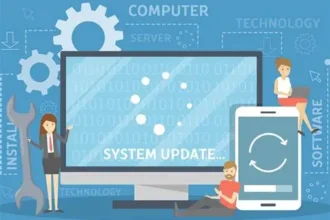
Outdated software is a major security risk. Hackers actively search for vulnerabilities in old systems and exploit them to gain access.
Regularly update operating systems, applications, antivirus software, and business tools. Install security patches as soon as they are released.
Enable automatic updates whenever possible to avoid forgetting.
Keeping systems current closes many doors that attackers might otherwise use.
Maintenance is one of the simplest and most effective protections.
Train Employees on Cybersecurity Awareness
Technology alone cannot stop every threat. Human error is often the biggest cause of security incidents.
Train employees to recognize phishing emails, suspicious links, and social engineering tactics. Teach them not to share passwords or sensitive data without verification.
Encourage staff to report unusual activity immediately. Creating a culture of awareness reduces the chances of mistakes.
Even short, regular training sessions can greatly improve security.
An informed team is your strongest defense.
Secure Your Wi-Fi and Network
Your business network should be properly secured to prevent unauthorized access. Use strong encryption such as WPA3 or WPA2 for Wi-Fi.
Change default router passwords and disable unnecessary features like WPS or remote management. Create a separate guest network for visitors.
Use firewalls to monitor and block suspicious traffic. Segmenting your network can also limit damage if one device is compromised.
A secure network protects everything connected to it.
Network protection is the foundation of cybersecurity.
(You will be redirected to another page)
Back Up Your Data Regularly
Backups are critical for protecting against ransomware, hardware failures, and accidental deletion. Without backups, data loss can shut down your business.
Follow the 3-2-1 rule: keep three copies of your data, on two different storage types, with one copy stored off-site or in the cloud.
Automate backups so they run consistently without manual effort. Test your backups regularly to ensure they can be restored.
Reliable backups allow you to recover quickly without paying attackers.
Preparation reduces downtime and stress.
Use Reliable Security Tools
Small businesses benefit from using basic security tools to strengthen defenses. Antivirus and anti-malware software help detect threats before they cause damage.
Email filtering tools block spam and phishing attempts. Firewalls protect networks from unauthorized access. VPNs secure remote connections for employees working from home.
Many affordable solutions are designed specifically for small businesses.
You don’t need expensive enterprise systems — just the right tools used properly.
Layered protection is more effective than relying on a single solution.
Control Access to Sensitive Information
Not every employee needs access to all data. Limiting access reduces the risk of misuse or accidental exposure.
Use the principle of least privilege, which means giving employees only the permissions necessary for their roles. Remove access when someone changes positions or leaves the company.
Protect sensitive files with encryption and strong authentication.
Controlling access helps minimize the impact of breaches.
Less access means fewer opportunities for mistakes.
Create an Incident Response Plan
Even with strong security, incidents can still happen. Having a plan helps you respond quickly and minimize damage.
An incident response plan should include steps for identifying threats, isolating affected systems, restoring backups, and notifying customers if necessary.
Assign responsibilities so everyone knows what to do during an emergency. Acting quickly can prevent small issues from becoming major disasters.
Preparation saves time and protects your reputation.
Being ready is better than reacting in panic.
Consider Compliance and Legal Requirements
Depending on your industry, you may need to follow data protection regulations such as GDPR, LGPD, or PCI-DSS. These rules often require specific security measures to protect customer information.
Understanding and complying with these standards helps avoid fines and builds customer trust.
Consulting legal or security professionals may be helpful for meeting requirements.
Compliance is both a legal and business responsibility.
Final Thoughts
Cybersecurity is not just a technical issue — it is a critical part of running a successful small business. Hackers increasingly target smaller companies because they expect weaker defenses, but simple strategies can dramatically reduce risks.
Strong passwords, multi-factor authentication, regular updates, employee training, secure networks, backups, and reliable security tools form the foundation of protection. These practices help safeguard customer data, maintain trust, and keep your business running smoothly.
By taking cybersecurity seriously and implementing these essential strategies, small businesses can defend themselves effectively and operate with confidence in an increasingly digital world.
 Keep an eye on this